
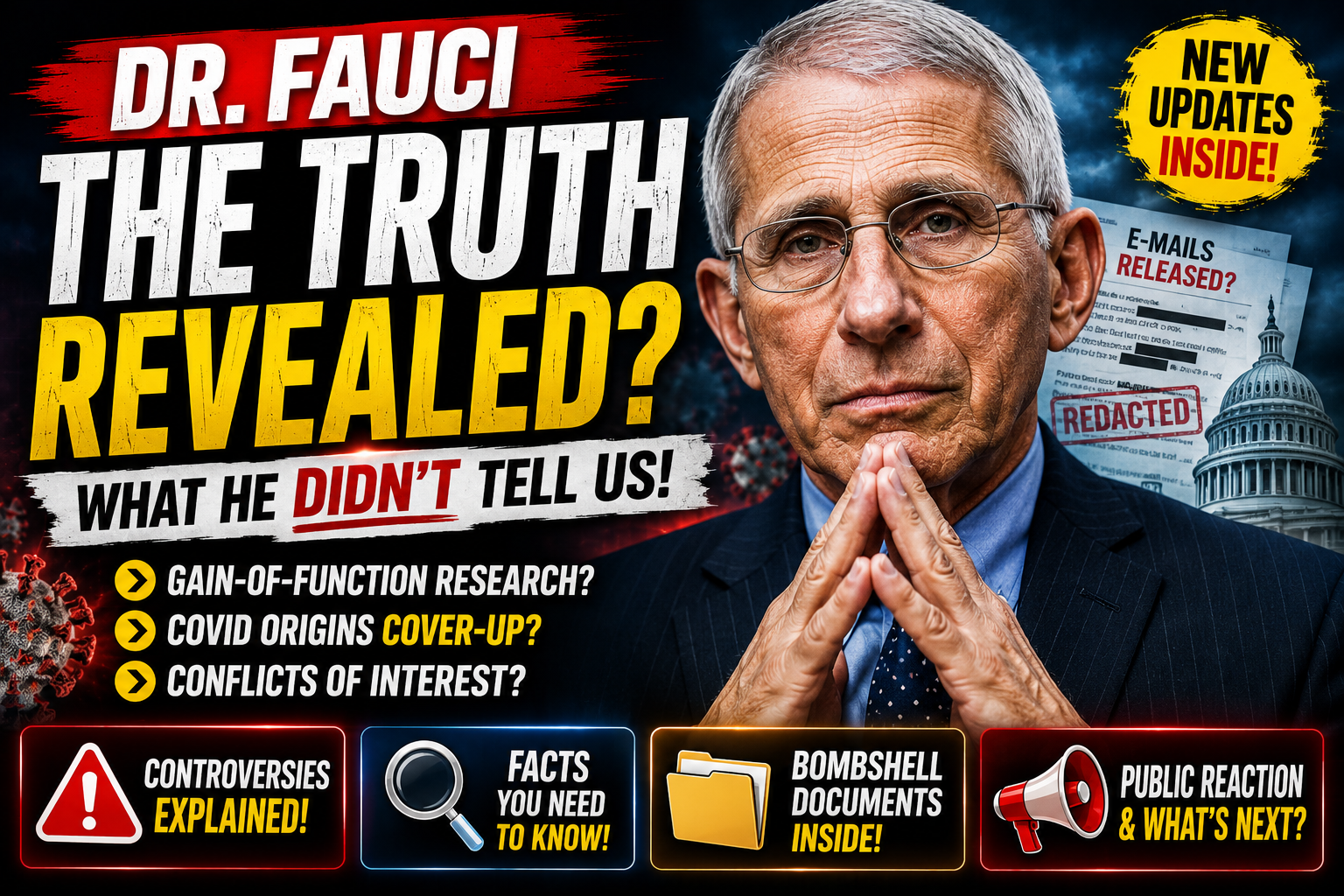
Dr Fauci spent over fifty years in public health service. Most people only learned his name in 2020, but his story started long before COVID-19 arrived. He spent decades running the National Institute of Allergy and Infectious Diseases, standardizing how America responds to deadly outbreaks. Whether you viewed him as a calming presence on television or questioned his recommendations, there is no denying his massive impact on global medicine. If you want to understand how modern health policy works, looking at his career gives you a clear front-row view.
From Brooklyn to Bethesda: Early Life and Education
Anthony Fauci was born in Brooklyn, New York, on Christmas Eve in 1940. His parents ran a neighborhood pharmacy in Dyker Heights. His father was the pharmacist, his mother and sister ran the cash register, and young Anthony delivered prescriptions on his bicycle.
That early exposure to medicine and customer service stayed with him. He learned how to listen to everyday people and explain hard topics in simple words. He went to Regis High School in Manhattan, a competitive Jesuit school, where he was captain of the basketball team despite his short height. After high school, he studied classics at Holy Cross before heading to Cornell University Medical College, graduating first in his class in 1966.
In 1968, he joined the National Institutes of Health as a clinical associate. He planned to stay for a couple of years, complete his research training, and go back to practicing medicine in a hospital. Instead, he ended up staying at the NIH for over fifty-four years.
Early Medical Breakthroughs
Before HIV emerged, Anthony Fauci made major breakthroughs in treating rare autoimmune diseases. In the early 1970s, he developed effective therapies for vasculitis, a dangerous condition causing inflammation of blood vessels. Diseases like Wegener’s granulomatosis had a mortality rate of over 90 percent back then. His research team treated patients with carefully calibrated doses of immunosuppressive drugs, turning a fatal diagnosis into a manageable condition with a high survival rate. This early success earned him high standing in the medical research community long before he became a household name.
The HIV/AIDS Crisis and Public Advocacy
In the early 1980s, young, healthy men started dying from a strange immune system breakdown. Dr Fauci was running an NIH research lab focused on immune system diseases. He saw these initial cases and decided to shift his lab’s entire focus to this new threat, which we now know as HIV.
In 1984, he became the director of the National Institute of Allergy and Infectious Diseases. It was a terrifying period. Treatment options were non-existent, and patients were dying quickly.
At first, AIDS activists protested outside his office. They felt the government was moving way too slowly to approve life-saving drugs. They staged protests on the NIH lawn, held signs, and shouted at public meetings.
Instead of ignoring them or calling security, Dr Fauci did something unusual for a government official back then. He invited activist leaders into his office. He sat down, drank coffee with them, and listened to their demands.
He realized the activists were right about several key points. The rigid rules for clinical trials were keeping sick people from trying experimental treatments. He worked with them to open up trials so patients could get access to new drugs while safety testing was still happening. This approach saved countless lives and created a brand-new model for medical research that is still used today.
Advising Seven U.S. Presidents
Working in Washington for decades requires incredible endurance and political balance. Dr Fauci advised seven different American presidents, starting with Ronald Reagan in the 1980s and ending with Joe Biden.
During George W. Bush’s presidency, Dr Fauci was one of the key architects of the President’s Emergency Plan for AIDS Relief, known as PEPFAR. In the late 1990s, HIV was devastating entire communities across Sub-Saharan Africa. Antiretroviral drugs were available in wealthy countries, but they were far too expensive for low-income nations. Dr Fauci traveled to Africa to evaluate the crisis firsthand. He returned to Washington and worked with President Bush to design a bold, taxpayer-funded program to buy and distribute HIV medicines overseas.
PEPFAR won strong bipartisan backing in Congress. Over twenty years later, the program has saved an estimated twenty-five million lives and built public health infrastructure in over fifty countries. Many public health experts consider PEPFAR one of the most successful international health programs in modern history.
He also helped guide response plans during several other major health scares over the decades:
- The 2001 anthrax letter attacks right after September 11.
- The 2009 H1N1 swine flu outbreak.
- The 2014 Ebola outbreak in West Africa.
- The 2016 Zika virus threat.
Through every administration, his stated goal was sticking to the scientific data, even when politicians wanted quick answers or politically convenient headlines.
The COVID-19 Pandemic Era
When COVID-19 spread globally in early 2020, Dr Fauci became the most visible doctor in the world. He served on President Trump’s coronavirus task force and later as chief medical advisor to President Biden. He appeared in daily White House briefings, gave hundreds of news interviews, and tried to explain virus mutations to a worried public.
For many people, he was a reassuring figure who brought scientific facts to television screens every night. For others, he became a figure of intense debate.
Why did opinions become so divided?
First, scientific understanding changed fast during the outbreak. Early in 2020, health officials told the public not to buy surgical masks because hospitals faced severe shortages. Later, as data showed how easily the virus spread through the air, guidance changed to recommend public masking. Updating advice based on new information made some people feel confused or misled.
Second, public health measures like business closures, remote schooling, and mask rules caused massive disruption to daily life. People were worried about their jobs, their children’s education, and their businesses. As the primary public face of health recommendations, Dr Fauci absorbed much of that public anger.
During this period, he received regular death threats, requiring a full-time security detail for himself and his family. His daily schedule during 2020 often involved 18-hour workdays, starting before dawn with agency briefings and ending late at night with television interviews.
You can explore official health protocols and research on the official NIH website.
Looking Fairly at Criticisms and Controversies
When anyone serves in public office for over five decades, every major decision gets examined closely. Critics raised several important points regarding public health choices made during his tenure.
One debate centered on federal funding for scientific research. Questions arose about grants provided to international research partners studying coronaviruses. Dr Fauci defended these grants as necessary to monitor animal viruses before they spill over into human populations. Critics argued that such research carried risks that needed tighter oversight.
Another ongoing discussion concerns the duration of pandemic restrictions. Some economists and public health scholars argued that keeping schools closed for extended periods caused measurable harm to children’s learning and emotional health. They believed public health advice should have weighed social and educational costs alongside virus risks much earlier in the response.
To see how national health data is collected and tracked, you can visit the official CDC website.
Life After Retirement
In December 2022, Dr Fauci stepped down from his position as director of NIAID and chief medical advisor to the president. He retired from government service at age 82 after fifty-four years at the NIH.
He did not step away from public life completely. Soon after leaving office, he joined Georgetown University as a distinguished professor, working in both the School of Medicine and the McCourt School of Public Policy.
He now spends his time writing, lecturing students, and speaking at global health summits. His focus has shifted to mentoring young doctors and helping researchers communicate complex science to everyday citizens.
How to Make Sense of Public Health News
Following the story of Dr Fauci gives you a great window into how public health actually works. Science is not a rigid book of permanent facts. It is a step-by-step process of testing ideas, gathering data, and making adjustments when new evidence appears.
When you read public health news, keeping these four practical rules in mind will help you stay informed without feeling overwhelmed:
- Check original sources whenever possible. Social media clips often leave out context. Look at official releases from major medical centers or peer-reviewed journals.
- Expect recommendations to evolve over time. When scientists get new information, public advice should change. That change is evidence that research is working, not that experts are guessing.
- Focus on scientific consensus rather than single opinions. A single doctor on video might sound convincing, but pay attention to where the broader scientific community stands. You can read about how medical consensus is built during outbreaks to understand how peer review protects patients.
- Keep public health facts separate from policy decisions. Medical data shows what a virus does. Policy decisions balance that data against economic, social, and personal priorities. Recognizing the difference helps you evaluate news more clearly.
What You Should Do Next
Instead of getting caught in online arguments about health policy, focus on building your own reliable system for health information.
Start by choosing two or three calm, objective health sources that report raw data without dramatic commentary. Bookmark them so you have a quick reference when new health topics pop up in the news.
If you want to understand how medical crises were handled in past decades, check out key milestones in modern epidemiology to see how past outbreaks shaped our current healthcare system.
Take ten minutes today to clean up your social media feeds. Mute channels that use outrage or fear to drive clicks, and replace them with verified medical university channels. You will get clearer answers and far less stress the next time health headlines dominate the news.
Growing Up in Brooklyn
Anthony Fauci was born in Brooklyn, New York, in 1940. His family ran a small neighborhood pharmacy. His father was the pharmacist. His mother and sister worked register duties. Anthony had a job too. He delivered prescriptions on his blue Schwinn bicycle.
This early start taught him a lot about people. He learned how to talk to everyone. He saw how medicine could help people feel better. He decided early on that he wanted to become a doctor.
He went to Regis High School in Manhattan. It was a strict school. He had to study very hard. He also played sports. He was the captain of the school basketball team. Even though he was short, he was quick. He was a great leader on the court.
After high school, he went to Holy Cross College. He studied classics and pre-med. He loved Greek philosophy and history. Next, he went to medical school at Cornell University. He worked hard and graduated first in his class in 1966. He was ready to change the world.
Joining the NIH and NIAID
In 1968, he made a big career choice. He joined the National Institutes of Health. People call this place the NIH. He worked in the lab to study the human immune system. He wanted to know how our bodies fight off bad germs.
He made big discoveries in his early years. He found treatments for rare diseases like vasculitis. Before his work, these diseases were almost always deadly. His research saved many lives. He became respected in the scientific world.
In 1984, he got a major promotion. He became the director of the National Institute of Allergy and Infectious Diseases. This group is called the NIAID. He stayed in this role for thirty-eight years. That is a very long time for a government job.
He worked under seven different US presidents. He started with Ronald Reagan. He ended his career under Joe Biden. He always said his goal was to focus on science, not politics. But staying neutral was not always easy.
Fighting Major Diseases
During his long career, dr fauci faced some of the worst health crises of our time. His first big test was the HIV/AIDS epidemic in the 1980s. In the beginning, people did not understand the virus. There was a lot of fear. People were dying quickly.
Activists were very angry with the government. They felt the NIH was too slow to test new drugs. They held protests outside his office. Instead of hiding, Fauci did something different. He invited the activists inside. He listened to their ideas.
He changed how clinical trials worked. He let patients try new drugs sooner. This choice saved many lives. He became friends with many of the activists. They praised him for his willingness to listen.
Later, he helped fight other major threats. He worked on the West Nile virus. He dealt with the anthrax scares after 2001. He also managed the response to Ebola and Zika. You can read our guide on how vaccines work to see how science fights these threats. He was always on the front lines of defense.
Then came Covid-19 in 2020. This was his biggest challenge. He became the face of the US pandemic response. He was on television almost every day. He tried to explain complex science to everyday people.
Why People Have Strong Opinions
Being in the public eye is not easy. During the pandemic, Fauci became a controversial figure. Some people saw him as a hero. They trusted his advice on masks and lockdowns. They felt he was a calm voice of science.
Other people felt differently. They did not agree with the lockdowns. They felt the rules hurt businesses and schools too much. Some felt he changed his mind too often on topics like masks. This created a lot of tension.
Science often changes when new facts come in. But this can confuse the public. It made him a target for political debate. He even received threats to his safety. He had to have security guards protect him.
In my view, this shows how hard it is to mix science with politics. Science looks for truth. Politics looks for power and votes. When they mix, things get messy fast. It is a hard lesson for the future.
The Work Ethic of a Public Servant
Fauci was famous for his intense work ethic. He often worked fifteen hours a day. He would wake up early and read medical papers. He did this for decades. He did not take many vacations.
To stay fit, he was an avid runner. He ran marathons in his younger years. Later, he shifted to running during his lunch breaks. He said running helped him clear his head. It gave him the energy to deal with high-stress situations.
In 2008, President George W. Bush gave him the Presidential Medal of Freedom. This is the highest civilian award in the United States. The president praised his work on HIV/AIDS. Specifically, Fauci helped create PEPFAR. This program helped get AIDS drugs to millions of people in Africa. It is considered one of the most successful health programs in history.
Retirement and His Next Chapter
At the end of 2022, he stepped down from his government jobs. He was eighty-two years old. But he did not stop working. He became a professor at Georgetown University. He now teaches medicine and public policy.
He also wrote a book about his life. The book talks about his childhood and his years in public service. He wants to inspire the next generation of scientists.
He still does interviews. He speaks about public health dangers. He also talks about the future. He wants people to trust science more. He believes honesty is the best way to help people.
Let us look at some quick facts about his long career. This table shows his path over the years.
| Year | Event |
|---|---|
| 1940 | Born in Brooklyn, NY |
| 1966 | Graduated from Cornell Medical College |
| 1968 | Joined the NIH |
| 1984 | Appointed Director of NIAID |
| 2008 | Received the Presidential Medal of Freedom |
| 2022 | Retired from government service |
Common Questions About Dr Fauci
How old is Dr Fauci?
He was born on December 24, 1940. He is currently eighty-three years old.
Who appointed him as head of NIAID?
He was appointed in 1984 during the administration of President Ronald Reagan. He stayed in that role for thirty-eight years.
What is his net worth?
Most of his money comes from his long career as a government doctor. He was one of the highest-paid federal employees for many years. He also earned money from book deals and speaking events.
Is he still working?
Yes, he is a professor at Georgetown University. He teaches classes and works with students. He also writes articles and speaks at public events.
Final Thoughts on a Long Career
His career spanned over five decades. He worked during some of the most difficult times in medical history. Whether you agree with him or not, his impact is clear. He helped shape how we fight diseases today.
He showed that public health is about more than just science. It is about communication and leadership. His story is a big part of modern medical history.
What do you think about his legacy? Do you think public health has changed for the better? Leave your thoughts in the comments below. We love to hear from our readers.










Leave a Reply