

In the fast-paced world of US retail technology, staying ahead requires more than just a great product. Modern businesses must prioritize digital storefront efficiency to meet the high expectations of today’s tech-savvy shoppers.
Streamlining your backend systems is a foundational step for achieving long-term retail business growth. By focusing on online store optimization, you ensure your brand remains competitive and responsive in a crowded marketplace.
Successful retail digital transformation is about creating a seamless experience for both your team and your customers. When you master e-commerce platform integration, you unlock the potential for operational excellence and sustainable success.
Key Takeaways
- Prioritize digital efficiency to satisfy modern consumer demands.
- Use technology to build a strong foundation for business expansion.
- Focus on store optimization to improve the overall shopping experience.
- Embrace digital transformation to stay competitive in the US market.
- Simplify backend processes to drive long-term operational success.
Current Trends in E-commerce Platform Integration
E-commerce platform integration is no longer just an IT task; it is a core business strategy for growth. As US retail technology continues to evolve, companies must find ways to bridge the gap between their online storefronts and backend operations. This evolution ensures that every transaction is smooth and every customer interaction is meaningful.
The Shift Toward Unified Omnichannel Experiences
Modern shoppers expect a seamless journey whether they are browsing on a mobile app or visiting a physical store. A successful omnichannel retail strategy requires that inventory, pricing, and customer data remain consistent across all touchpoints. When these systems are disconnected, retailers often face stock discrepancies and frustrated customers.
By centralizing data, brands can provide a truly personalized experience that builds long-term loyalty. This approach allows retailers to offer services like “buy online, pick up in-store” with total confidence. It transforms the way businesses interact with their audience in the digital age.
Leveraging API-First Architectures for Scalability
Adopting an API-first e-commerce approach is the most effective way to remain agile in a crowded market. This method allows developers to build scalable e-commerce architecture that can adapt to changing consumer demands without requiring a complete system overhaul. By using cloud-based retail systems, businesses can easily add new features or integrate third-party tools as they grow.
The following table highlights the key differences between traditional integration methods and modern, flexible approaches:
| Feature | Legacy Systems | Modern API-First |
|---|---|---|
| Connectivity | Rigid and siloed | High retail platform connectivity |
| Scalability | Limited and costly | Highly elastic and fast |
| Maintenance | High manual effort | Automated and streamlined |
| Deployment | Slow, monolithic updates | Rapid, modular updates |
Practical Strategies for Seamless System Connectivity
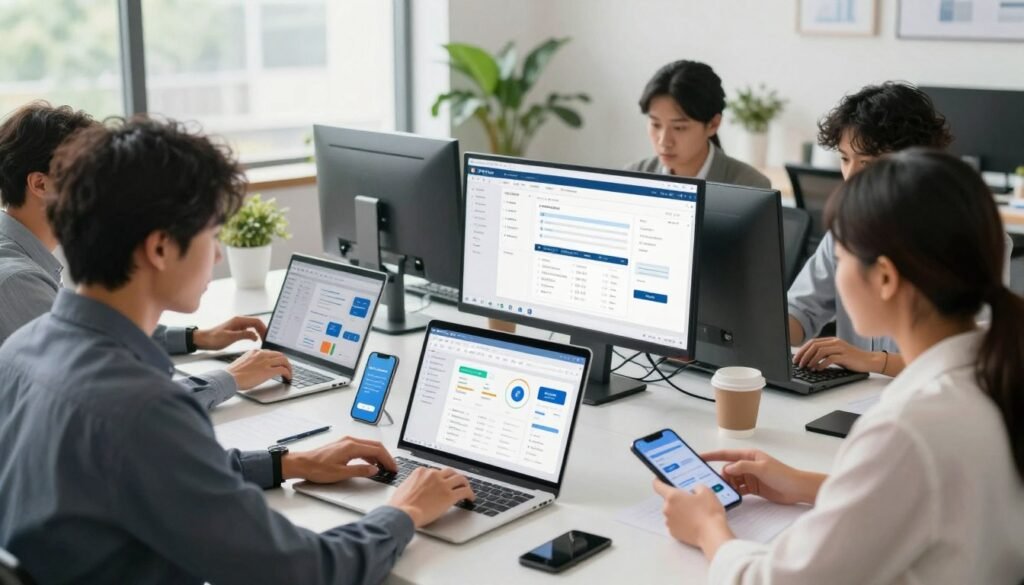
Building a reliable bridge between your sales channels and inventory is the backbone of successful retail. When your systems communicate effectively, you unlock new levels of online store optimization. This level of e-commerce platform integration ensures that your business remains agile in a competitive market.
Prioritizing Data Synchronization Between Inventory and Sales
Achieving seamless data synchronization is essential for preventing overselling and stock discrepancies. By connecting your inventory management software directly to your storefront, you ensure that stock levels update in real-time across all channels. This accuracy builds trust with your customers and reduces the need for manual intervention.
Selecting Middleware Solutions for US Market Compliance
Choosing the right e-commerce middleware is a critical step for long-term growth. Robust middleware acts as a central hub, simplifying US e-commerce compliance while connecting disparate software tools. It allows you to scale your operations without worrying about technical bottlenecks or data silos.
Ensuring PCI DSS Compliance During Data Transfers
Protecting customer information is non-negotiable for any retailer operating in the United States. You must ensure that your integration architecture strictly adheres to PCI DSS standards to maintain secure payment processing. Using encrypted data transfers keeps sensitive financial information safe from unauthorized access during every transaction.
Automating Tax Calculations for Multi-State Operations
Managing tax obligations across different jurisdictions can be overwhelming for growing businesses. Implementing automated tax software is the most effective way to handle the complexities of multi-state tax compliance. This technology provides US sales tax automation, ensuring that you collect the correct amount from every customer regardless of their location.
| Strategy | Primary Benefit | Operational Impact |
|---|---|---|
| Real-time Sync | Inventory Accuracy | Reduces manual errors |
| Middleware Hub | System Scalability | Centralizes data flow |
| Tax Automation | Compliance Safety | Saves administrative time |
| PCI Encryption | Data Security | Protects customer trust |
Conclusion
Mastering e-commerce platform integration serves as a vital pillar for sustained retail business growth across the United States. Brands that prioritize these technical connections position themselves to outperform competitors in a crowded market.
Your commitment to retail digital transformation creates a foundation for long-term success. Modern tools allow your team to focus on customer needs rather than manual data entry. This shift directly improves your digital storefront efficiency by reducing errors and speeding up order fulfillment.
Take the next step by auditing your current software stack today. Small adjustments to your backend systems often lead to significant gains in operational speed. Reach out to your technical partners to discuss how these updates align with your specific sales goals.
We invite you to share your experiences with system migrations in the discussion area below. Your insights help other retailers navigate the complexities of the modern online landscape. Start optimizing your infrastructure now to ensure your brand remains agile and ready for future market shifts.
FAQ
Why is e-commerce platform integration so critical for US retailers today?
For modern businesses, e-commerce platform integration is the foundation of operational excellence. By streamlining your digital infrastructure, you ensure your brand can handle the high demands of tech-savvy shoppers, leading to sustained retail business growth and improved digital storefront efficiency.
What does a unified omnichannel experience mean for my customers?
A unified omnichannel experience ensures that your customers have a seamless transition whether they are shopping on their mobile device, a desktop, or in a physical store. By prioritizing retail digital transformation, you create a consistent brand presence that builds trust and boosts online store optimization.
How does an API-first e-commerce approach help my business scale?
Adopting an API-first e-commerce strategy allows your systems to be incredibly agile. By using cloud-based retail systems and a scalable e-commerce architecture, you can easily connect new tools and services—like ShipStation for logistics or Klaviyo for marketing—ensuring your retail platform connectivity remains strong as you grow.
How can I keep my inventory and sales data synchronized across multiple channels?
The most effective way is to prioritize data synchronization between your inventory management software, such as Oracle NetSuite or Microsoft Dynamics 365, and your sales platforms. Utilizing robust e-commerce middleware acts as a bridge, reducing manual errors and providing a real-time view of your stock levels.
What are the requirements for maintaining US e-commerce compliance during data transfers?
To ensure US e-commerce compliance, retailers must strictly adhere to PCI DSS standards to protect sensitive payment data. Additionally, it is vital to use secure e-commerce middleware that encrypts information during transfers between your storefront and your back-end systems.
How do I manage the complexity of multi-state tax compliance?
Managing taxes across different states can be overwhelming, which is why many successful retailers implement automated tax software like Avalara or TaxJar. These tools automate the calculations based on the latest regulations, ensuring your business remains compliant with multi-state tax compliance laws while you focus on scaling your operations.











Leave a Reply